Home About Us Reviews Order Learn Contact Us


Since 1889


Welcome

What is Ghee?
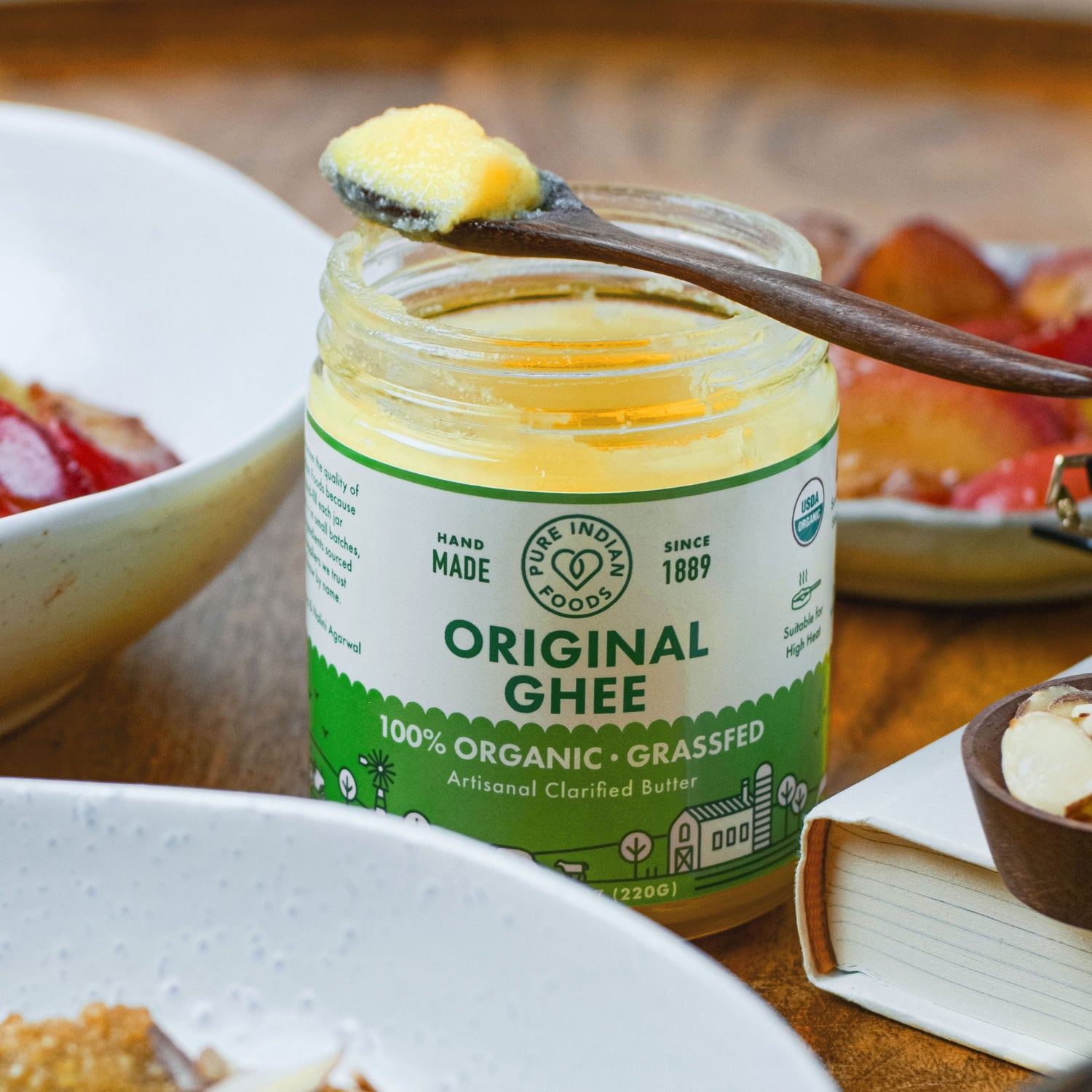
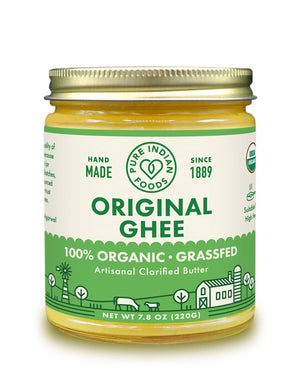
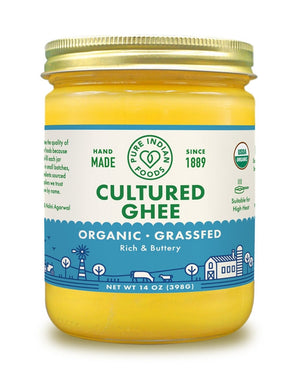
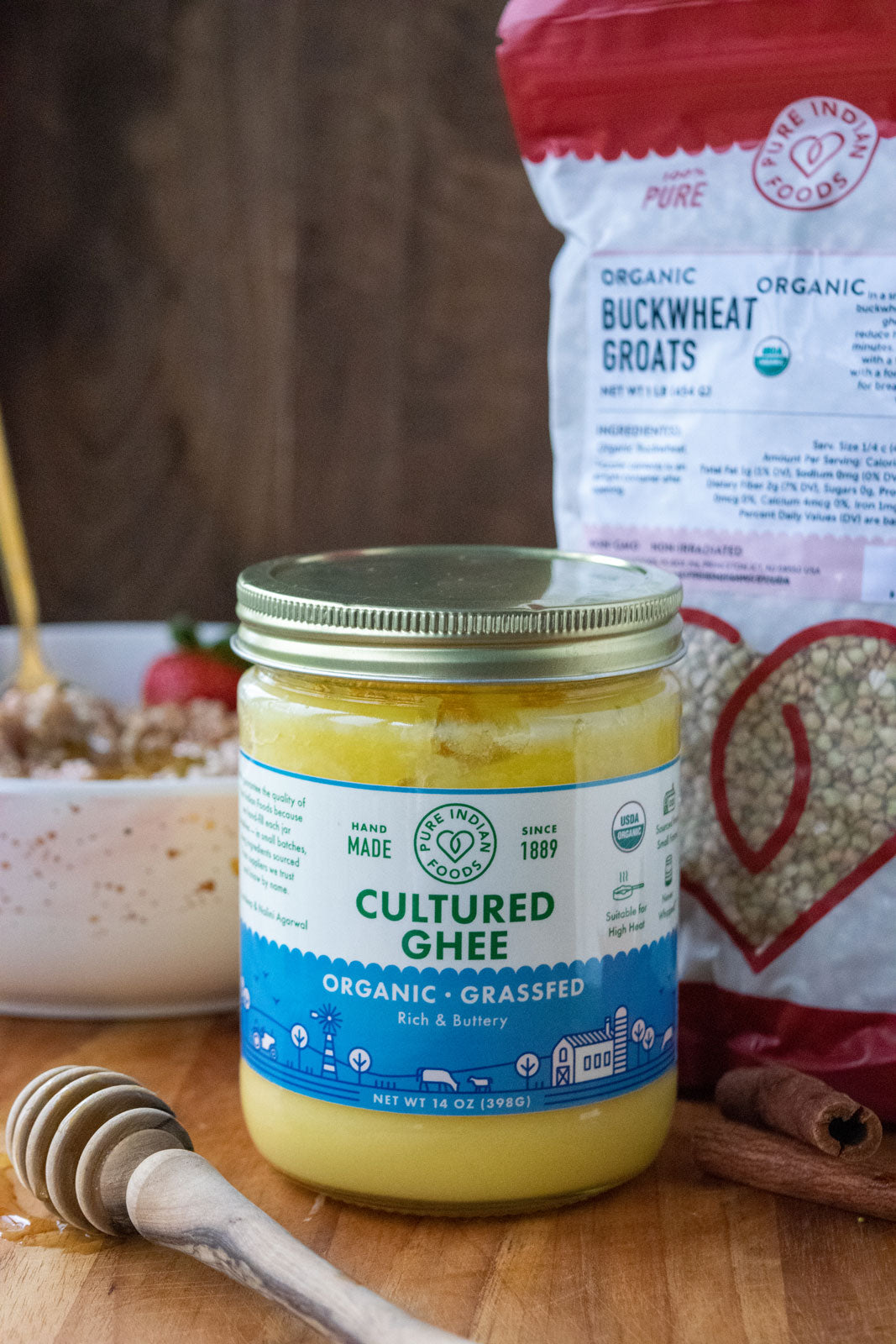
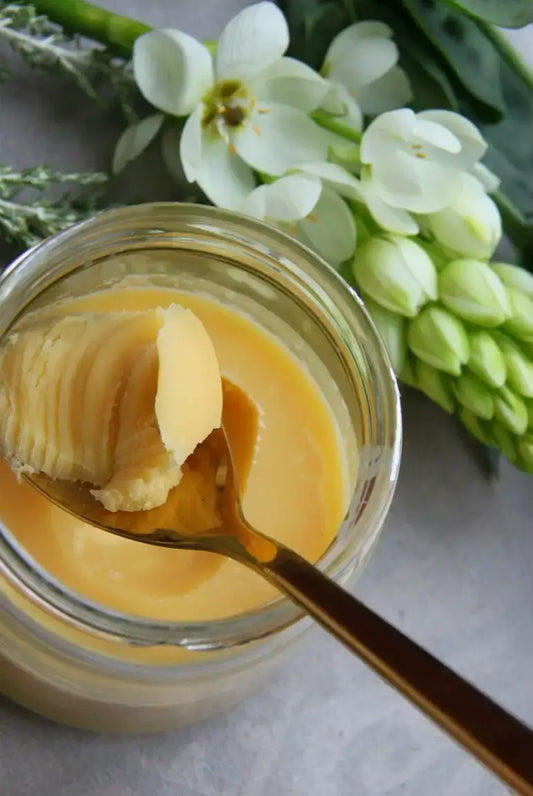
Golden colored Ghee is prepared by melting and simmering unsalted butter until all the water evaporates and the milk solids settle at the bottom. The remaining butter oil is very stable, giving it a high smoke point which makes it an excellent choice to use for frying and sautéing and it can be stored without refrigeration for several months. Ghee is also known as Indian Clarified Butter, Drawn Butter, Butter Oil, Ghee Butter or Anhydrous Milk Fat (AMF). In India and other South Asian countries, it is also known as Desi Ghee, Pure Ghee, Asli Ghee or Ghritam. Ghee is a dairy product and as such it is gluten-free.

Ghee has a very long and rich history. It has been used in Indian cooking for thousands of years. According to an article published in the journal Nature, traces of ghee and cheese were found in pottery from 6,500 BC. The following quote from an Indian philosopher Charvak (3,000 BC) shows the importance of ghee:


In Sanskrit:
    Yada Jeevam, Sukham Jivet
    Rinam Kritvam, Ghritam Pibet

which means:
    As long as you live, live happily
    Beg, borrow or steal, but relish ghee

Let's understand Organic
Organic foods are produced without the use of artificial fertilizers, conventional pesticides, human waste, or sewage sludge. They are processed without the use of ionizing radiation or food additives. Organic dairy products come from animals that are given no antibiotics or growth hormones.

What is Grass-fed?
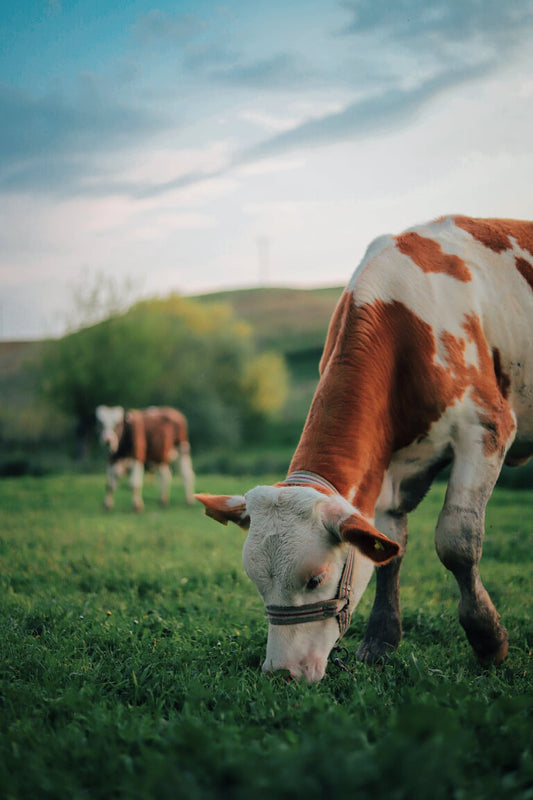
Grass-fed cows are pasture-raised and eat what nature intended them to eat: Grass. Most of the conventional cows are fed large amounts of grains (primarily corn), soy and other supplements to increase milk production and decrease cost. They are kept in crowded feedlots and don’t get the opportunity to roam freely and peacefully in the sun and eat high-fiber green grass. This makes them vulnerable to various diseases, which are then treated with antibiotics. Cows are also given growth hormones to increase milk production. However, scientific studies show that grass-fed, pasture-raised cows are healthier and they produce better quality and safer milk.

Grass-fed Benefits

More Conjugated Linoleic Acid (CLA): Pasture-grazed cows have 500% more CLA in their milk than grain fed cows.
CLA is an important nutrient that has been getting a lot of attention lately. It is a potent antioxidant primarily found in the fat and butterfat of grass-fed ruminant animals. In animal studies, it has been shown to have potent cancer-fighting properties. Lab studies also suggest that it may improve bone formation by enhancing calcium absorption. CLA has been shown to reduce body fat in overweight people. It has also been shown to enhance muscle growth and boost our immune systems. Research shows that CLA supplements may have some serious side-effects, which is why naturally occurring CLA, like that found in our ghee, is best. Ghee contains other natural fats that act synergistically with CLA to produce its anti-carcinogenic properties, which are not found in CLA supplements.

Higher levels of "Activator X"
(also known as the "X Factor")

In 1945, Dr. Weston A. Price described what he called "Activator X" as a critical nutrient for optimal health. This "X Factor" has now been identified as Vitamin K2. This vitamin is naturally occurring in the fat of ruminants that graze upon rapidly growing, green grass. This is one reason why our ghee is such a boost to health! Our 100% certified organic butter comes exclusively from grassfed, pasture-raised cows.

Ratio of Omega-6 and Omega-3 Fats
Research indicates that if the ratio of Omega-6/Omega-3 exceeds 4:1 then it may contribute to the development of diseases. This ratio is around 3:1 for grass-fed animals and over 20:1 for grain-fed animals, since grass is rich in Omega-3 and grains have higher Omega-6. So eating more grass-fed products helps you maintain the right balance of Omega-6 and Omega-3 fatty acids.

Go Green
Grass-fed dairies are generally small. They promote harmony between the land and the animals. They support biodiversity and reduce waste. They work in a sustainable manner and are good for our environment.

Ghee Benefits

Best for cooking
Ghee is one of the best oils for cooking. It stimulates digestive fire (or Agni) according to Ayurveda. It has a very high smoke point and its chemical structure does not change at high heat. It produces sweet aroma when heated. You use less than half of other oils and it enhances the flavor of food.

Sattvic Food
Cow Ghee is considered a sattvic food in Ayurveda. Cow milk has the essense of the grass and plants, and cow ghee possesses the essense of cow milk.

Brain Food
Ghee is a nutrient dense food and contains CLA, fat soluble vitamins A, D, E and K2 (Activator X). Fat soluble vitamins help in production of proteins and lipids essential for mental health. Synthetic vitamins don't contain co-factors, activators and enzymes which are required for the full absorption of the vitamins. So getting your vitamins from natural food is the best and safest option.

Healthy Skin
Ghee keeps skin soft, smooth and lubricated. It also has anti-aging properties.

Dr. Weston A Price's X Factor
A nutrition pioneer Dr. Weston A Price documented the tremendous health benefits of taking deep-yellow butter oil (high in X Factor) especially with cod liver oil.

No Harmful Trans Fats
Ghee does not contain harmful trans fats or hydrogenated oils which can cause heart disease and many other serious health problems.

Carrier of Herbs
Ghee is a carrier of nutrition due to it ability to penetrate deep into tissues. Ghee also aids in the absoprtions of vitamins and minerals in the food. This is the reason so many of Ayurvedic medicines are based on ghee.

Ghee vs. Butter

Great for cooking
Ghee has a very high smoke point (~400 °F) and is considered one of the best oils for baking, sautéing and deep frying. When you sauté with butter, the milk solids precipitate to the bottom of the pan and they burn to produce a bad smell, appearance and taste. Ghee does not contain milk solids and it is very stable at high heat. In fact, ghee gets richer in flavor as you heat it!

Casein- and Lactose-Free
Casein and lactose are removed from butter during the clarification process, making ghee easier to digest. As such, ghee is suitable for people allergic to dairy or have casein or lactose intolerance.

Shelf Stable
A well-prepared ghee has very little moisture content and it is shelf-stable. You do not need to refrigerate it for 2-3 months if you keep it in an airtight container. This makes it suitable to carry while traveling or camping. When kept in refrigerator, ghee can last up to a year. Aged ghee is considered to have healing properties. Some families in India have ghee which is over 100-year old. Such an old ghee is rare and is very expensive.

Rich Flavor
Ghee has a rich, sweet and deliciously nutty flavor. A little amount of ghee adds a lot of flavor to the food. One tablespoon of ghee can replace up to three tablespoons of oil or butter in your recipe.

Alkalizing Effect
Ghee has slightly alkalizing effect on the body whereas butter has a slightly acidifying effect.

Medicinal Usage
A ghee which has been properly washed accordingly to Ayurvedic specifications is very beneficial in healing the skin. A small amount of ghee applied to belly button nourishes the entire body and is especially helpful is healing dried lips. Ghee is widely used in Ayurvedic massages and medicines.


Ghee Bowl


cows on pasture


Copyright © 2008-2009, Pure Indian Foods Corporation. All rights reserved.